Double Glass Framed Fulgora Laternaria
The Fulgora lanternaria, better known as the "Peanut-Head Bug," is one wild-looking insect that feels like it came straight out of a sci-fi movie. It’s native to the tropical forests of Central and South America and grabs attention with its weird looks and mysterious behavior.
The first thing you’ll notice is its long, peanut-shaped head. Some say it even looks like a lizard’s snout. No one’s totally sure what it’s for, but many believe it helps scare off predators by making the bug look like a snake or some other larger animal. Its colorful hind wings add to the drama, flashing bold, eye-like patterns when it feels threatened. It's a clever trick to startle anything that might try to eat it.
Even though it looks intense, the Peanut-Head Bug is completely harmless. It’s a herbivore that mostly feeds on tree sap and helps keep its ecosystem in balance.
There are all kinds of stories about this bug. Some cultures think it brings good luck, and others believe it has magical glowing powers because of the word "lantern" in its name. In reality, it doesn’t light up at all, but that doesn’t make it any less fascinating.
The Fulgora lanternaria is a great example of how strange and creative nature can be. It’s full of surprises and definitely worth a closer look.
Product Information
Product Information
Shipping & Returns
Shipping & Returns
Double Glass Framed Fulgora Laternaria
Double Glass Framed Fulgora Laternaria
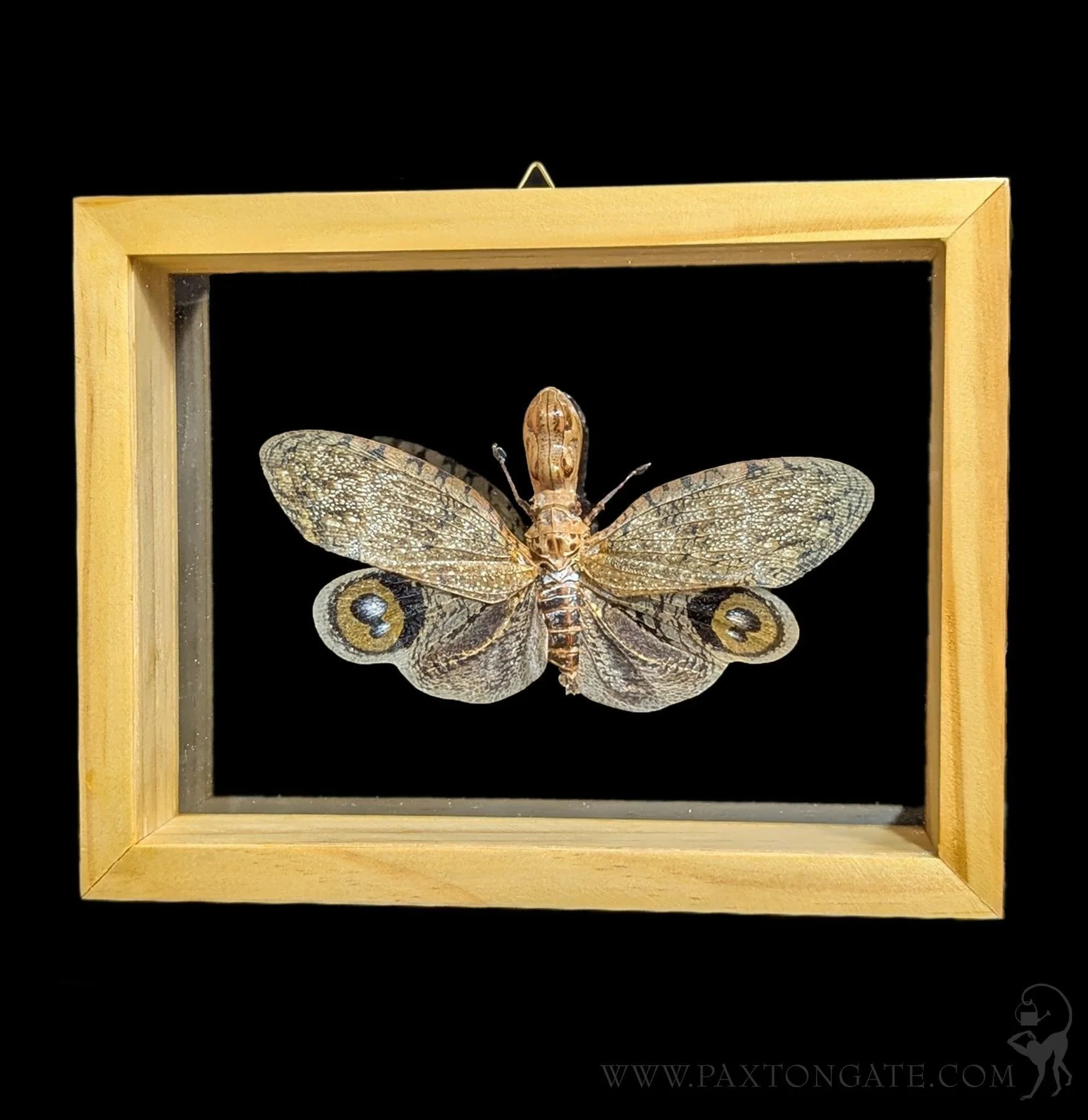
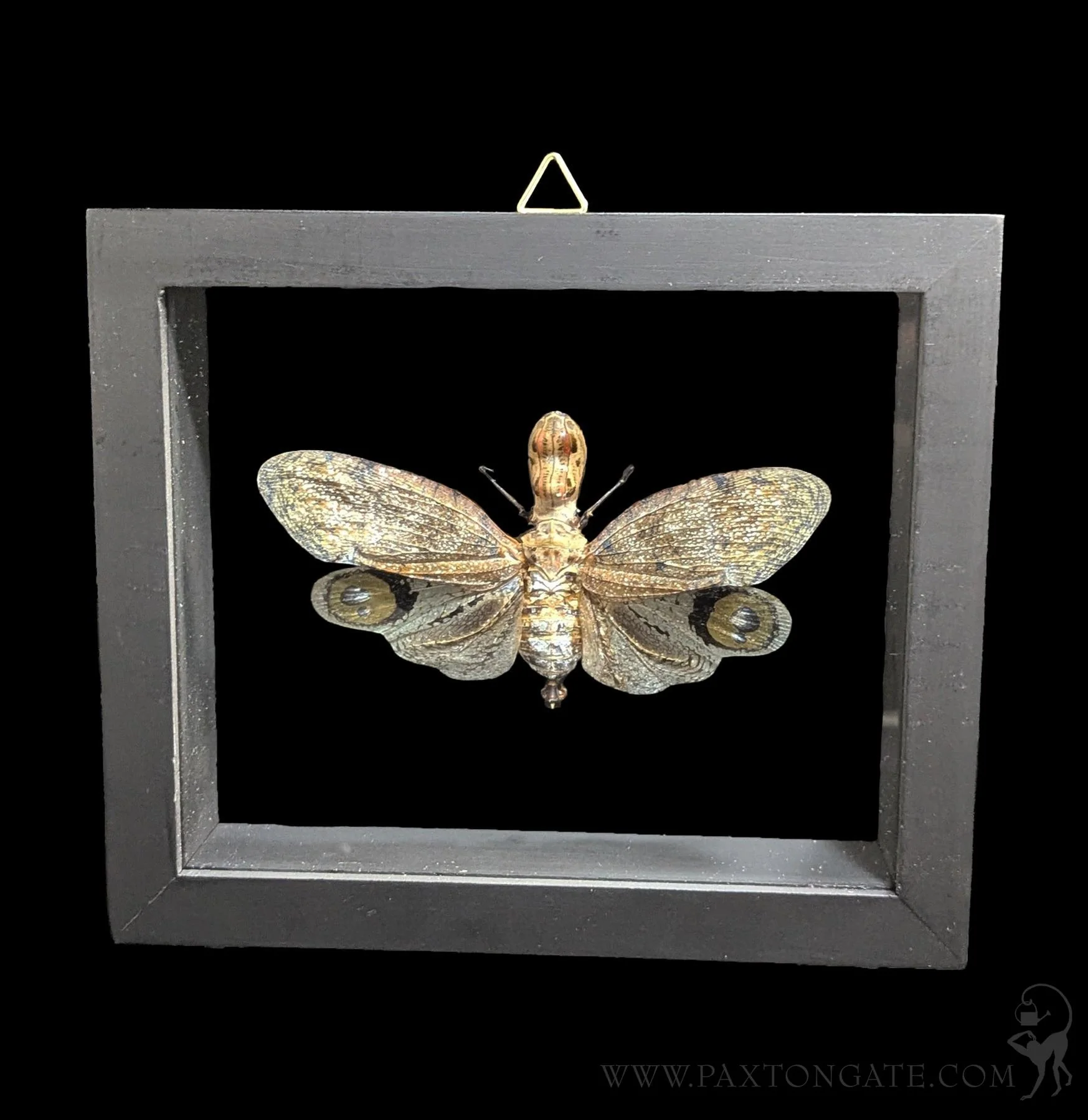
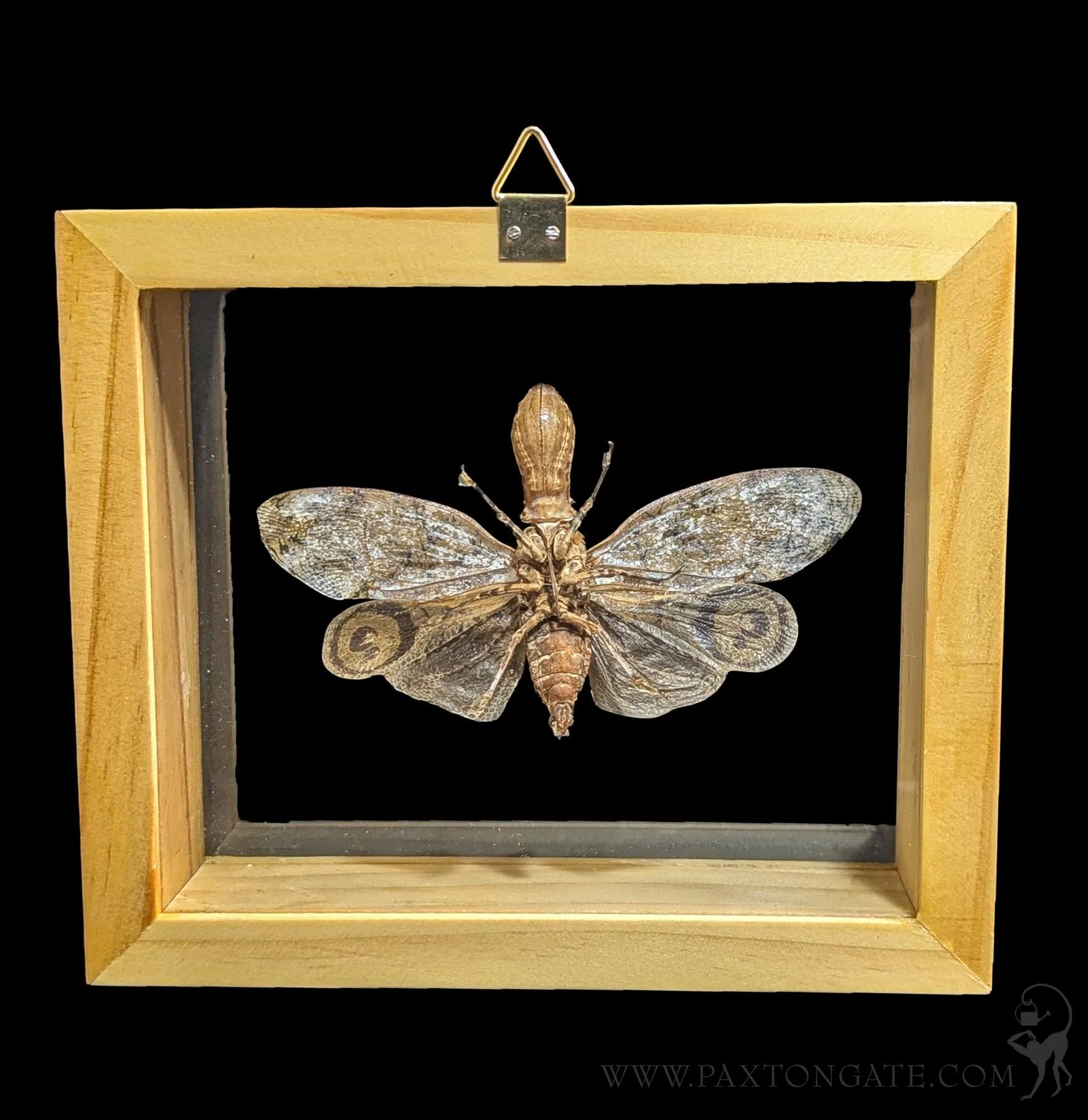
The Fulgora lanternaria, better known as the "Peanut-Head Bug," is one wild-looking insect that feels like it came straight out of a sci-fi movie. It’s native to the tropical forests of Central and South America and grabs attention with its weird looks and mysterious behavior.
The first thing you’ll notice is its long, peanut-shaped head. Some say it even looks like a lizard’s snout. No one’s totally sure what it’s for, but many believe it helps scare off predators by making the bug look like a snake or some other larger animal. Its colorful hind wings add to the drama, flashing bold, eye-like patterns when it feels threatened. It's a clever trick to startle anything that might try to eat it.
Even though it looks intense, the Peanut-Head Bug is completely harmless. It’s a herbivore that mostly feeds on tree sap and helps keep its ecosystem in balance.
There are all kinds of stories about this bug. Some cultures think it brings good luck, and others believe it has magical glowing powers because of the word "lantern" in its name. In reality, it doesn’t light up at all, but that doesn’t make it any less fascinating.
The Fulgora lanternaria is a great example of how strange and creative nature can be. It’s full of surprises and definitely worth a closer look.
Product Information
Product Information
Shipping & Returns
Shipping & Returns
Description
The Fulgora lanternaria, better known as the "Peanut-Head Bug," is one wild-looking insect that feels like it came straight out of a sci-fi movie. It’s native to the tropical forests of Central and South America and grabs attention with its weird looks and mysterious behavior.
The first thing you’ll notice is its long, peanut-shaped head. Some say it even looks like a lizard’s snout. No one’s totally sure what it’s for, but many believe it helps scare off predators by making the bug look like a snake or some other larger animal. Its colorful hind wings add to the drama, flashing bold, eye-like patterns when it feels threatened. It's a clever trick to startle anything that might try to eat it.
Even though it looks intense, the Peanut-Head Bug is completely harmless. It’s a herbivore that mostly feeds on tree sap and helps keep its ecosystem in balance.
There are all kinds of stories about this bug. Some cultures think it brings good luck, and others believe it has magical glowing powers because of the word "lantern" in its name. In reality, it doesn’t light up at all, but that doesn’t make it any less fascinating.
The Fulgora lanternaria is a great example of how strange and creative nature can be. It’s full of surprises and definitely worth a closer look.