Fossilized Spider in Amber
99 million years old
Sourced from Myanmar
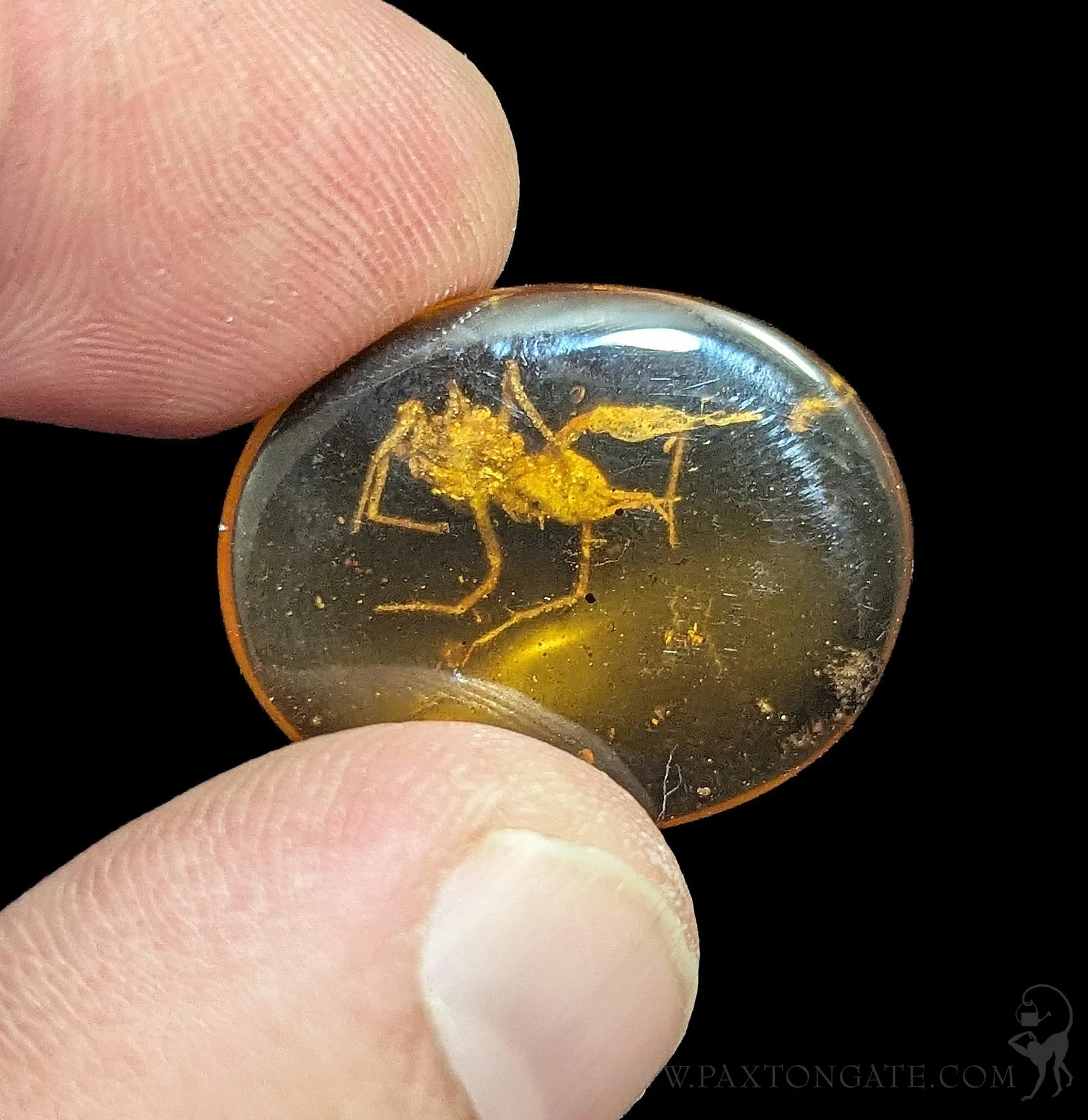
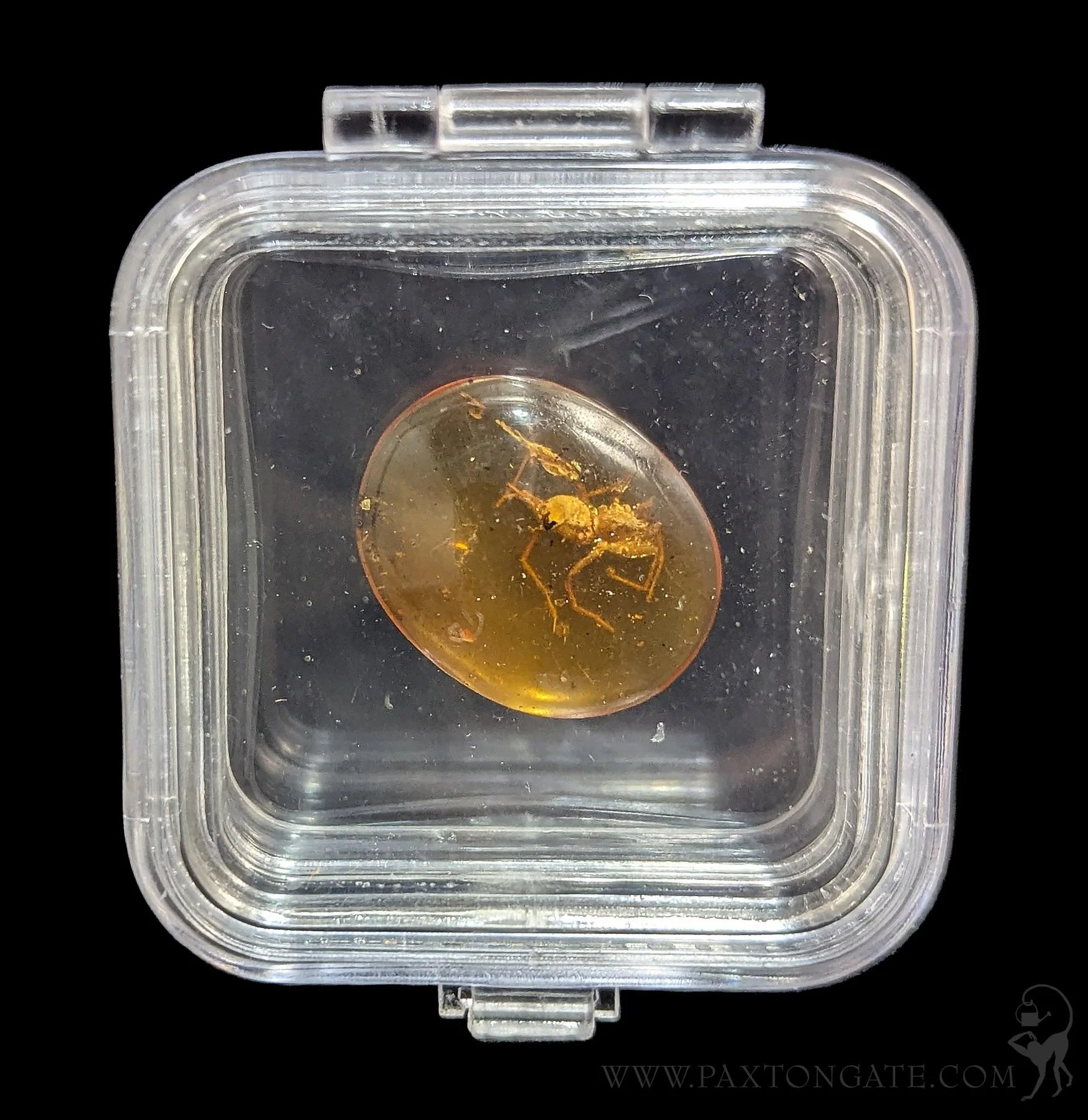
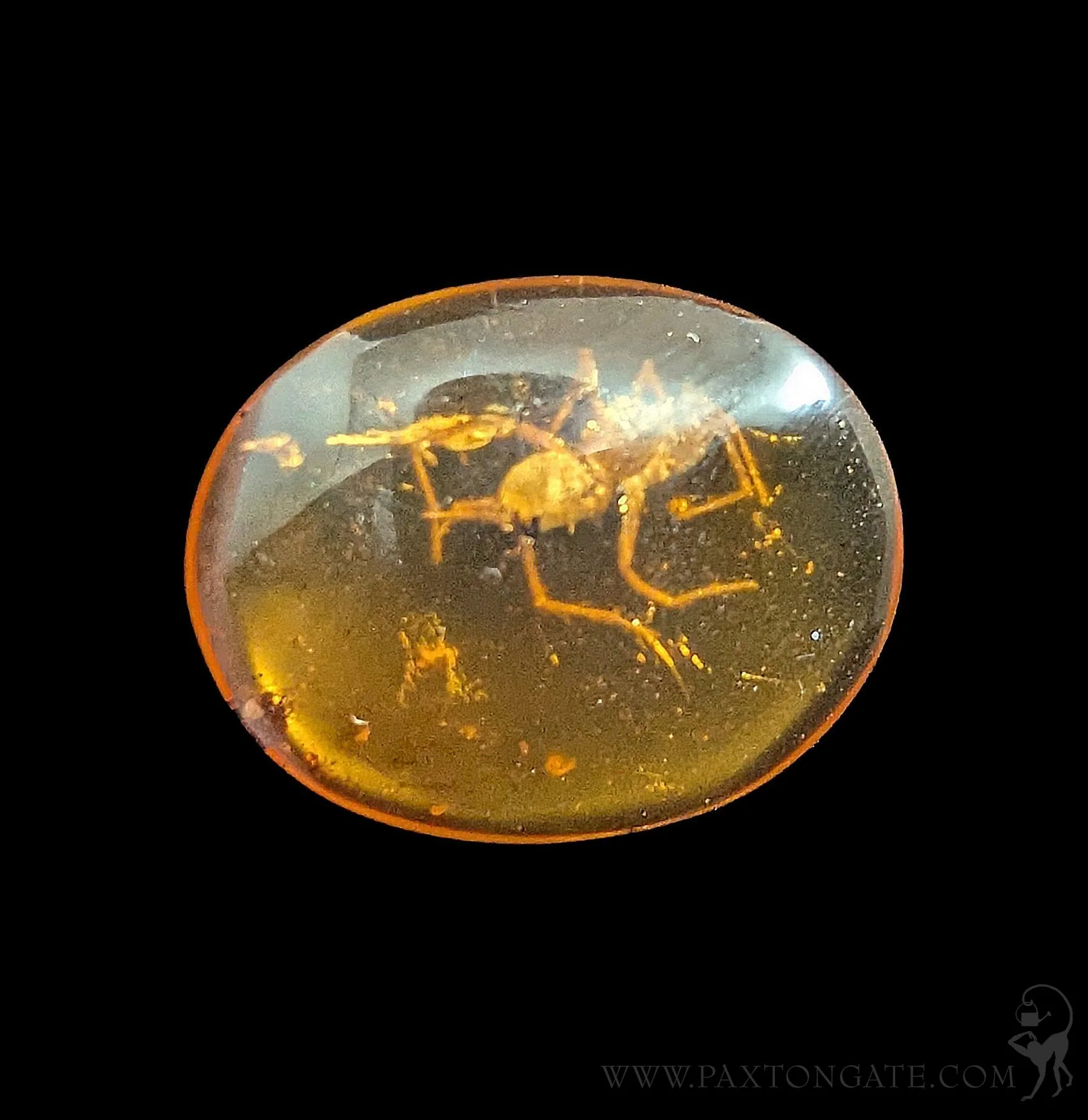
When we stumbled across this, we absolutely knew we needed to have it in our collection. We’ve had other insects in amber before, but the definition, age, and overall impressive “aura,” as the kids would say, was just too good to pass up.
This particular specimen was sourced from Myanmar and is approximately 99 million years old, dating to the Cretaceous Period, specifically the early Cenomanian Age. During that time, dinosaurs were thriving, plant life was exploding, and the continents themselves were slowly grinding into the positions we see them in today.
This tiny spider lived during a period we can only imagine, among creatures that have become near mythical in our minds. One big evolutionary shift was happening with plants. Flowering plants, also called angiosperms, expanded rapidly and began to reshape ecosystems. This affected insects too, leading to more specialized pollinators.
This spider was part of that evolutionary shift and, like a magic time capsule, traveled to our modern day and is now at Paxton Gate. It’s hard to really put into words how mindbendingly amazing that is, let alone try to comprehend the sights and sounds this spider lived among.
If it wasn’t obvious yet, this small but insanely impactful specimen has become one of our favorites, and we couldn’t be more excited to share it with y’all.
Product Information
Product Information
Shipping & Returns
Shipping & Returns



Fossilized Spider in Amber
Fossilized Spider in Amber
99 million years old
Sourced from Myanmar
When we stumbled across this, we absolutely knew we needed to have it in our collection. We’ve had other insects in amber before, but the definition, age, and overall impressive “aura,” as the kids would say, was just too good to pass up.
This particular specimen was sourced from Myanmar and is approximately 99 million years old, dating to the Cretaceous Period, specifically the early Cenomanian Age. During that time, dinosaurs were thriving, plant life was exploding, and the continents themselves were slowly grinding into the positions we see them in today.
This tiny spider lived during a period we can only imagine, among creatures that have become near mythical in our minds. One big evolutionary shift was happening with plants. Flowering plants, also called angiosperms, expanded rapidly and began to reshape ecosystems. This affected insects too, leading to more specialized pollinators.
This spider was part of that evolutionary shift and, like a magic time capsule, traveled to our modern day and is now at Paxton Gate. It’s hard to really put into words how mindbendingly amazing that is, let alone try to comprehend the sights and sounds this spider lived among.
If it wasn’t obvious yet, this small but insanely impactful specimen has become one of our favorites, and we couldn’t be more excited to share it with y’all.
Original: $1,200.00
-65%$1,200.00
$420.00Product Information
Product Information
Shipping & Returns
Shipping & Returns
Description
99 million years old
Sourced from Myanmar
When we stumbled across this, we absolutely knew we needed to have it in our collection. We’ve had other insects in amber before, but the definition, age, and overall impressive “aura,” as the kids would say, was just too good to pass up.
This particular specimen was sourced from Myanmar and is approximately 99 million years old, dating to the Cretaceous Period, specifically the early Cenomanian Age. During that time, dinosaurs were thriving, plant life was exploding, and the continents themselves were slowly grinding into the positions we see them in today.
This tiny spider lived during a period we can only imagine, among creatures that have become near mythical in our minds. One big evolutionary shift was happening with plants. Flowering plants, also called angiosperms, expanded rapidly and began to reshape ecosystems. This affected insects too, leading to more specialized pollinators.
This spider was part of that evolutionary shift and, like a magic time capsule, traveled to our modern day and is now at Paxton Gate. It’s hard to really put into words how mindbendingly amazing that is, let alone try to comprehend the sights and sounds this spider lived among.
If it wasn’t obvious yet, this small but insanely impactful specimen has become one of our favorites, and we couldn’t be more excited to share it with y’all.