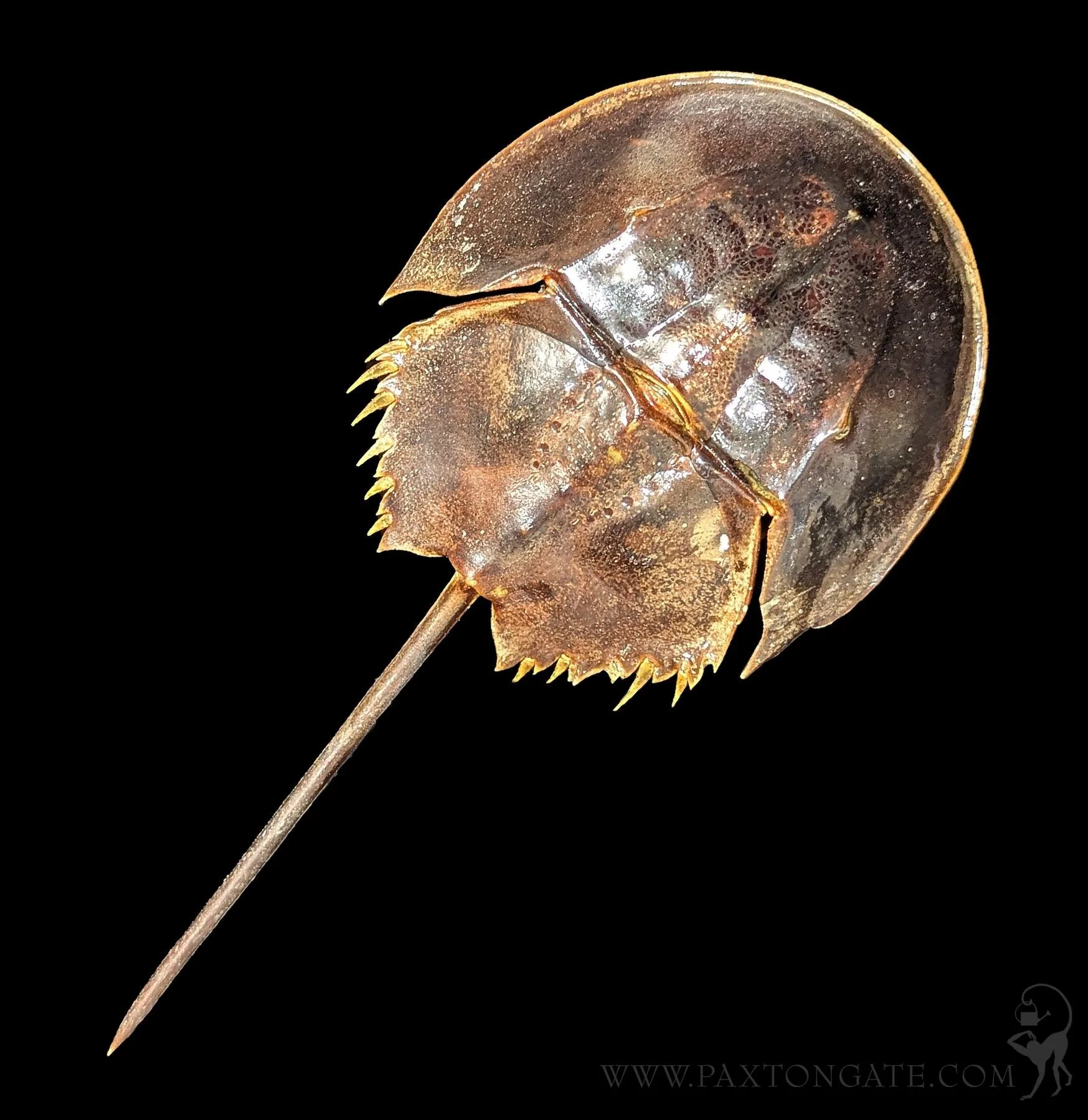
Preserved Horseshoe Crab
Scientific name: Tachypleus tridentatus
Horseshoe crabs are those funky-looking sea creatures that kind of resemble helmets with tails. For all you Pokémon fans out there, this is why the Pokémon Kabuto resembles a horseshoe crab—kabuto means "helmet" in Japanese. More specifically, it refers to a traditional Japanese military helmet, especially associated with the samurai class and their armor in feudal Japan.
Now that we’ve gotten that Pokémon and Japanese history tangent out of the way, let’s talk about this interesting specimen. Despite the name, they’re not actually crabs—they’re more closely related to spiders and scorpions. Oddly enough, this is just the first of many enigmas that cloak this creature of the depths.
They've also been around for hundreds of millions of years, basically unchanged, which makes them living fossils. They shared the same habitats with trilobites, which is wild when you really think about it. You’ll usually find them hanging out in shallow coastal waters, especially during the spring when they come ashore in big groups to lay eggs.
Fun fact: their blue blood (yes, it’s actually blue) is super valuable in the medical world because it’s used to test for bacteria in vaccines and surgical equipment. They're pretty awesome little weirdos of the sea.
These specimens are dried and are safe to store right out in the open. We've only carried them a few times but they truly do make for an interesting piece to add to your collection.
Product Information
Product Information
Shipping & Returns
Shipping & Returns
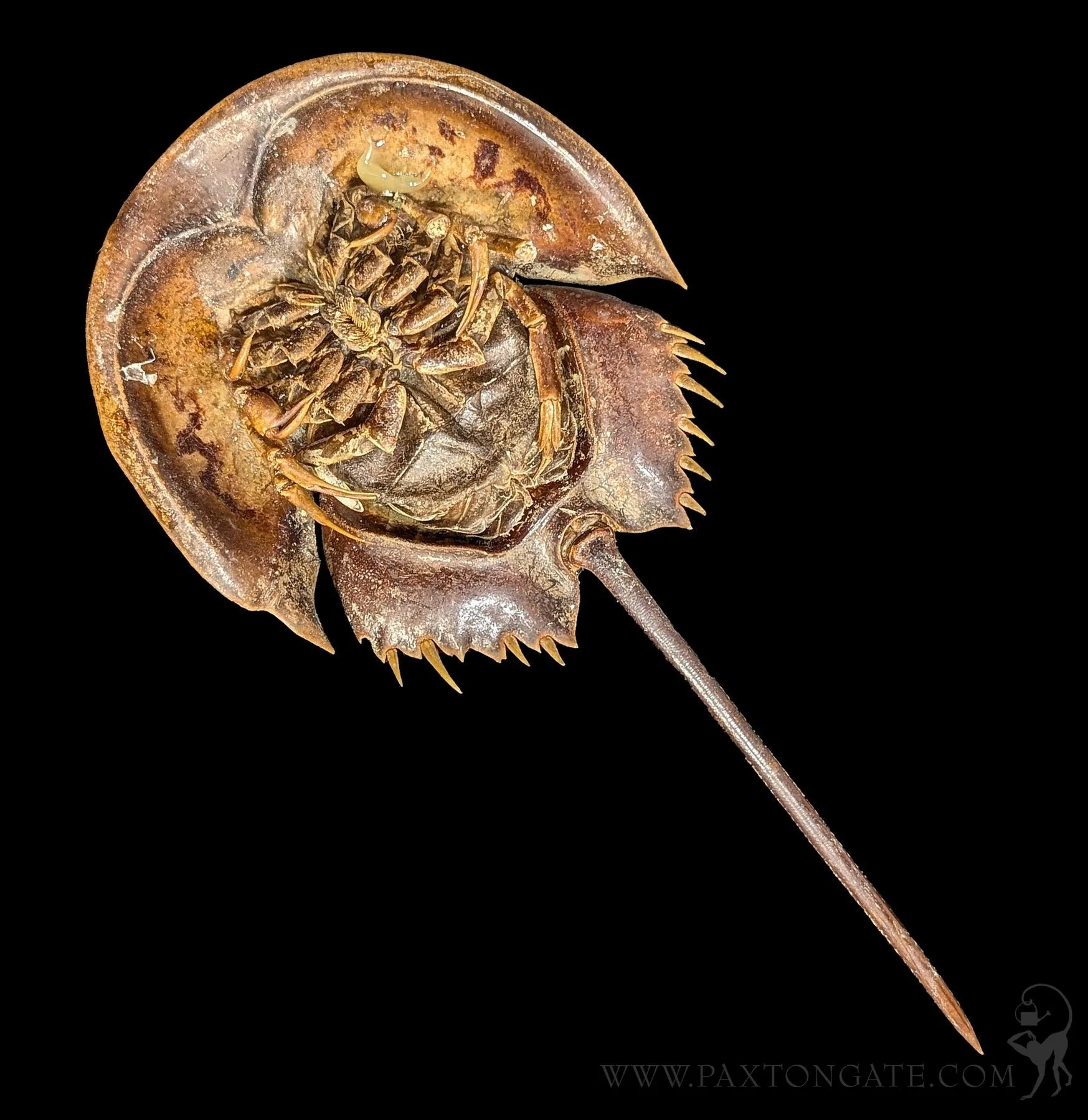
Preserved Horseshoe Crab
Preserved Horseshoe Crab
Scientific name: Tachypleus tridentatus
Horseshoe crabs are those funky-looking sea creatures that kind of resemble helmets with tails. For all you Pokémon fans out there, this is why the Pokémon Kabuto resembles a horseshoe crab—kabuto means "helmet" in Japanese. More specifically, it refers to a traditional Japanese military helmet, especially associated with the samurai class and their armor in feudal Japan.
Now that we’ve gotten that Pokémon and Japanese history tangent out of the way, let’s talk about this interesting specimen. Despite the name, they’re not actually crabs—they’re more closely related to spiders and scorpions. Oddly enough, this is just the first of many enigmas that cloak this creature of the depths.
They've also been around for hundreds of millions of years, basically unchanged, which makes them living fossils. They shared the same habitats with trilobites, which is wild when you really think about it. You’ll usually find them hanging out in shallow coastal waters, especially during the spring when they come ashore in big groups to lay eggs.
Fun fact: their blue blood (yes, it’s actually blue) is super valuable in the medical world because it’s used to test for bacteria in vaccines and surgical equipment. They're pretty awesome little weirdos of the sea.
These specimens are dried and are safe to store right out in the open. We've only carried them a few times but they truly do make for an interesting piece to add to your collection.
Original: $22.00
-65%$22.00
$7.70Product Information
Product Information
Shipping & Returns
Shipping & Returns
Description
Scientific name: Tachypleus tridentatus
Horseshoe crabs are those funky-looking sea creatures that kind of resemble helmets with tails. For all you Pokémon fans out there, this is why the Pokémon Kabuto resembles a horseshoe crab—kabuto means "helmet" in Japanese. More specifically, it refers to a traditional Japanese military helmet, especially associated with the samurai class and their armor in feudal Japan.
Now that we’ve gotten that Pokémon and Japanese history tangent out of the way, let’s talk about this interesting specimen. Despite the name, they’re not actually crabs—they’re more closely related to spiders and scorpions. Oddly enough, this is just the first of many enigmas that cloak this creature of the depths.
They've also been around for hundreds of millions of years, basically unchanged, which makes them living fossils. They shared the same habitats with trilobites, which is wild when you really think about it. You’ll usually find them hanging out in shallow coastal waters, especially during the spring when they come ashore in big groups to lay eggs.
Fun fact: their blue blood (yes, it’s actually blue) is super valuable in the medical world because it’s used to test for bacteria in vaccines and surgical equipment. They're pretty awesome little weirdos of the sea.
These specimens are dried and are safe to store right out in the open. We've only carried them a few times but they truly do make for an interesting piece to add to your collection.